
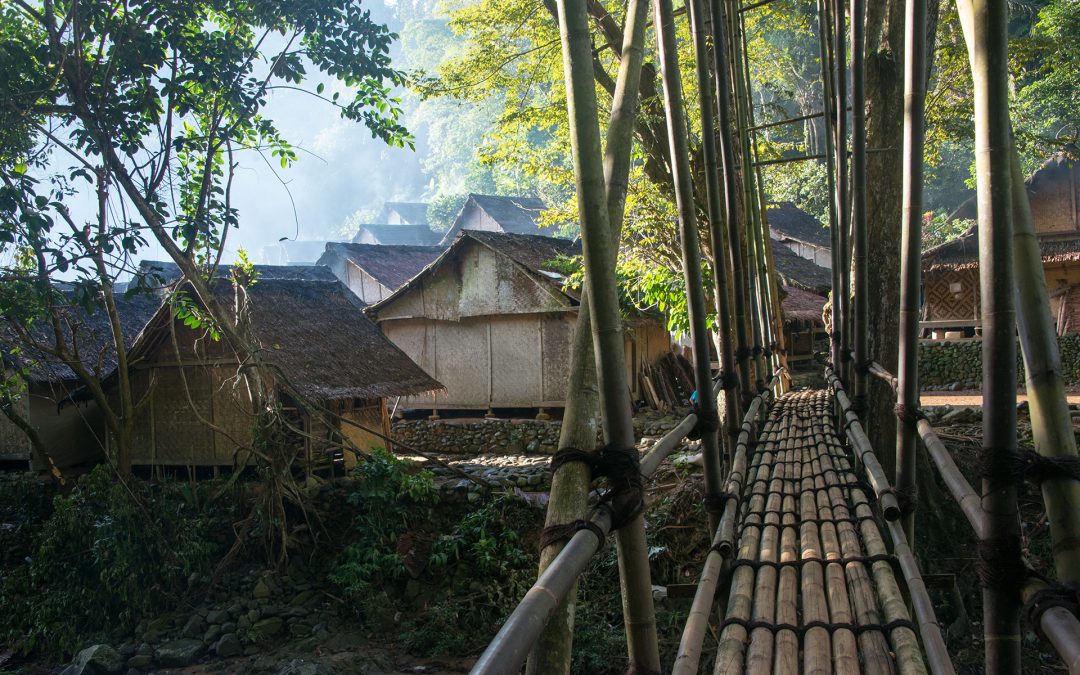
The Baduy people live only 167 kilometres from Jakarta. They live in the Kendeng Mountains, follow a traditional way of life and do not embrace any aspects of modern living. It is, for example, forbidden to use a wheel or travel in a vehicle with a wheel. They do not wear shoes, which means that when they come to Jakarta, they walk barefoot.
“I visit Jakarta often,” Herman said, “It is a two-day walk from my village to reach the outskirts of Jakarta. I was 15 years old when I took my first trip. I know the way by heart. My feet are hardy,” he continued, “I have taken the journey over fifty times now. I cross two mountain ranges and then follow the railway tracks all the way to Lebak Bulus. Along the route, I sell my handicrafts and hand-woven clothing. Even though I stay with friends, Jakarta gives me a big headache because there is so much traffic, and I have no desire to live there. However, I do like the city vibe and of course, the beautiful women,” he said with a chuckle.

Herman went on to explain, “I don’t have a handphone, so I just show up at my friends’ house. I am always treated well. I am happy to sell my hand-spun clothing and handicrafts and meet city people. I return home when all my wares are sold, and then I resume my farming duties in my village”.
I was fascinated with Herman’s feet. The leathery-looking tops of his feet and soles supported wide, almost webbed toes. This “barefoot policy” for the Baduy people is only one part of the challenges they confront, which include hard physical labour in the fields (without ploughs that have wheels), and preparing for and attending many rituals and ceremonies.

There are two Baduy villages. The inner village is known as Baduy Dalem, and the outer village is known as Baduy Luar. As a foreigner, you are only allowed to visit the outer village. The inner village is a closed and private world open only to Indonesians and, if they are not locals, they even have to get permission to enter.
The “inner” Baduy adhere to their age-old beliefs and religion, following their mystical leaders, the Pu’un, who are not allowed to leave the inner village. Their religious belief is known as Sunda Wiwitan, and they honour a supreme deity. The Old Sundanese language is used in their prayers and rituals.

It’s easy to recognise a Baduy Dalam (also known as White Baduy), as they wear white headcloths and carry a large white cloth bag called a gendongan.
Look out for them in Jakarta. They tend to walk in single file and sometimes make the front page of The Jakarta Post. Not many people can claim that! If you do chance to see a group of them walking on the roadside, by all means, please pull over and say hello. All their wares can be found neatly stacked in their gendongan. They would be more than happy to sell you something and lighten their load.
It takes around five hours by car to reach the village from Jakarta, and you will need a guide to organise all your food and supplies. One of the nicest aspects of staying in the village is the incredible sense of peace you feel there. There is only nature, including a wide variety of animal and bird life, a slow-moving river, and the ancient click-clacking rhythm of the local women’s weaving looms.

Published Grapevine Magazine Sept 2018
Story by Stephanie Brookes
Stephanie Brookes is a travel writer and blogger with tales from Indonesia and beyond.
http://www.facebook.com/stephtravelwriter
www.instagram.com/stephtravelwriter
Author –Indonesia’s Hidden Heritage; Cultural Journeys of Discovery
Fact File
Baduy Village, Kendeng Mountains, Banten, West Java
Nearest town – Rangkasbitung, Banten
Guide – Pak Kelik
Email – keliksumarahadi@gmail.com
Tel – +62 812 8179 9768
Trekking Guide – Pak Kelik – arranges transport from Jakarta, porters, and food. Accommodation is in a modest and clean homestay in the village.
Tips – Try to avoid the high season – May to July

