

In Indonesia, some of the most powerful green movements are happening at the grassroots level, driven by ordinary people with extraordinary commitment.
When most of us think of environmental solutions, we imagine international organisations with million-dollar budgets or government policies drafted in far-off offices. Yet in Indonesia, some of the most effective green movements begin in banjar meeting halls, on village riverbanks, and inside classrooms, powered by local communities who care deeply about the planet. For expats living here, these initiatives offer not only inspiration but also a chance to get involved.
Plastic for Rice: Dignity in Exchange
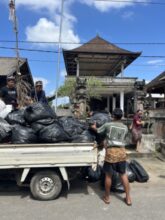 On collection days across several Balinese villages, the local banjar comes alive. When I visited Pesalakan Village, just outside Ubud, I saw an elderly woman arrive with a neat bundle of plastic bags, a group of children dragging sacks filled with bottles and wrappers, and one family pushing a wheelbarrow down the narrow alley, loaded with a week’s worth of cans and plastic. At the centre of it all, volunteers weighed the plastic and handed out rice, meals, and other goods in exchange.
“This Plastic for Rice initiative started five years ago and has grown rapidly,” said Made Astawa, the Head of Pesalakan Village, Bali. “We’ve kept improving the system, and now we’ve renamed it Bank Sampah [Waste Bank] because it turns plastic into something of value. We’re constantly seeking new donors to help villagers trade their plastic waste for food, snacks, and other donated goods. It takes place every two months, and our biggest collection so far reached two tonnes of recycled materials in one day.”
Instead of being seen as shameful rubbish, plastic has become currency. For villagers, it’s a chance to keep their homes and streets clean while securing everyday necessities. Some communities have expanded the idea further, offering soap, cooking oil, and school supplies as donations allow.
What’s striking is the sense of dignity. What might once have been a dirty, hidden task becomes a joyful community event, filled with laughter, chatter, and pride. For expats who attend, it’s a lesson in how tradition and innovation blend seamlessly. The local culture of gotong royong, mutual cooperation, is applied to one of today’s most urgent global challenges.
River Cleanup Crews: Guardians of the Waterways
Indonesia’s rivers are breathtaking. They wind through rice fields and rainforests, but they’re also on the frontline of the plastic crisis. Every day, tonnes of waste flow downstream towards the ocean. Yet, in places such as West Java, Central Sulawesi, and Kalimantan, local heroes are stepping up.
Student-led groups like River Cleanup Indonesia mobilise young people to haul rubbish out of rivers such as the Cikapundung in Bandung. They run engaging TikTok campaigns and rally ‘river warriors’ to join in. It’s the local community groups and youth organisations partnering with NGOs that have brought the Cikapundung River back to life.
In rural Java, villagers use canoes or bamboo rafts to scoop bottles and bags from the water. These clean-ups are about more than collecting litter; they’re about transforming mindsets. After the hard work, volunteers often sit with families living along the riverbanks to explain how plastic waste harms fish and contaminates drinking water. Some groups, such as Sungai Watch, install simple floating barriers to trap rubbish before it reaches the sea. Others turn their clean-ups into community festivals, complete with music, food, and storytelling.
The result is a ripple effect. Children who help on a Saturday think twice before tossing a wrapper on Sunday. Fishermen who see cleaner water become more motivated to protect their catch. Slowly but surely, rivers are being reclaimed as sources of pride rather than dumping grounds.
Schools Recycling for Points: Raising the Next Green Generation
If the future belongs to the young, Indonesia’s schools are paving the way.
In Jakarta, West Nusa Tenggara, and North Sulawesi, classrooms are becoming laboratories for change through ‘recycle-for-points’ schemes. Students bring recyclables from home, bottles, cartons, or old paper, and earn points that can be exchanged for prizes such as stationery, snacks, books, or even small discounts on school fees. The rewards are fun, but the actual value lies in the shift of mindset.
Children begin to see waste not as something to throw away but as a resource to be managed. Teachers integrate the programme into lessons, and parents often get involved too, encouraged by their children to separate household rubbish. Many schools collaborate with local waste banks, ensuring the materials collected are properly recycled. It’s a practical, hands-on education whose impact extends far beyond the classroom.
Hero of the Month: Banjar Pesalakan, Bali
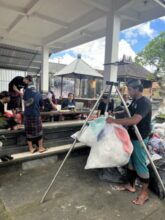 Outside Ubud, the community of Banjar Pesalakan has exchanged over two tonnes of plastic for rice, goods, and supplies. On collection days, the lanes fill with laughter as residents hand over bottles and bags. They leave with their exchanges and a renewed sense of pride. The streets end the day cleaner and the pantries fuller, proof that small actions, multiplied, can make a big difference.
Why These Movements Matter
What makes these initiatives successful isn’t technology or big budgets, it’s people power. Grassroots movements are deeply rooted in local culture and daily life. They’re practical, immediate, and, most importantly, effective.
For expats, these local heroes offer both inspiration and a meaningful way to connect with their communities. You can donate supplies to Plastic Exchange (Bali), support your local waste bank, join a river clean-up, contribute books to a school programme, or sponsor a small project. Each action not only helps the environment but also builds bridges of understanding between cultures.
Every plastic bag collected and every bottle redeemed is a reminder: Indonesia’s real environmental champions aren’t just policymakers or NGOs, they’re grandmothers, fishermen, students, and schoolchildren leading the fight for a greener future.
Get Involved!
Join a Clean-up: Groups such as Trash Hero have local chapters nationwide and welcome volunteers.
Donate Rice or Supplies: Support Plastic for Rice with food staples or logistics. Visit your local banjar or village to find out which community near you has started a similar programme.
Support Schools: Provide prizes, books, or sponsorships for ‘recycle-for-points’ initiatives.
Spread the Word: Share stories, photos, and experiences to encourage wider participation.
If you’d like to learn more about these initiatives, visit the links below:
Plastic Exchange (Bali): togethernessproject.net
Sungai Watch (Indonesia): email: gary@sungaiwatch.com
Mudfish No Plastic (Indonesia): mudfishnoplastic.com
Trash Hero (Indonesia): trashhero.org
River Cleanup (Indonesia): river-cleanup.org
Bye Bye Plastic Bags (Indonesia): byebyeplasticbags.org
Ecoton (East Java): ecoton.or.id
Clean Currents Coalition (Citarum River, Java): cleancurrentscoalition.org
Systemiq – Project STOP: systemiq.earth/project-stop-clean-rivers/
World Wildlife Fund – WWF Indonesia: www.wwf.id/en
Published in Indonesian Expat October, 2025

